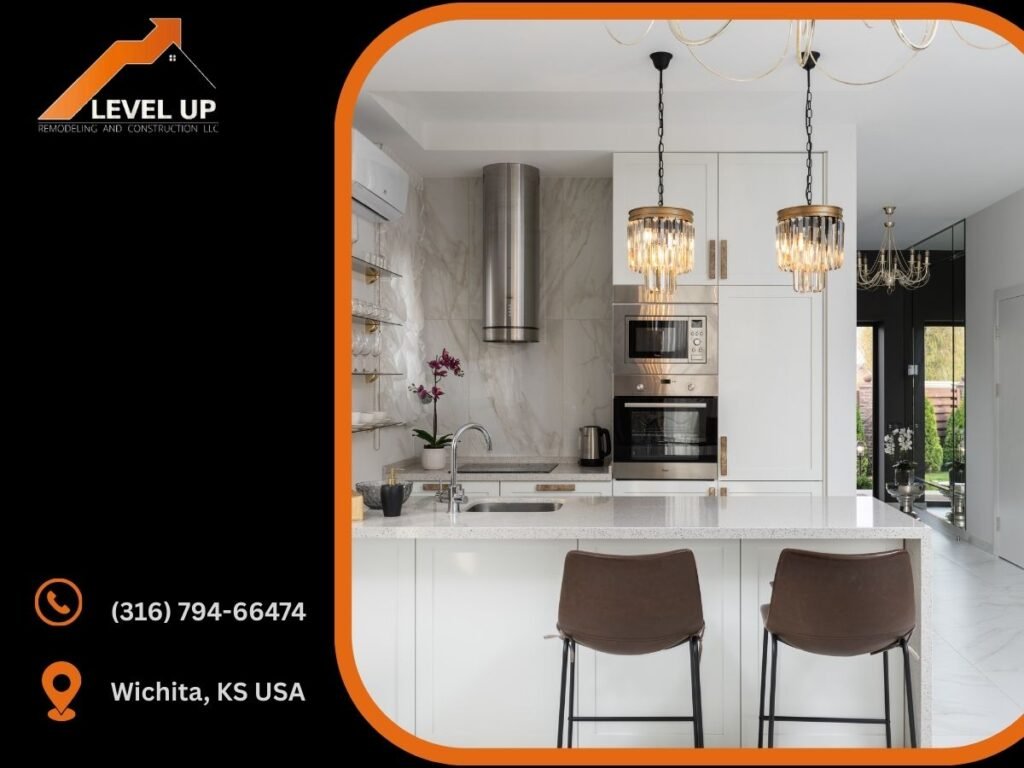
At level up Construction LLC Remodeling your kitchen is one of the best ways to refresh your home and increase its value. A modern kitchen not only makes cooking enjoyable but also impresses guests and potential buyers. However, many homeowners worry about the kitchen remodeling cost. Stylish cabinets, new countertops, and upgraded appliances sound amazing, but the expenses can quickly add up. The good news is that with smart planning and the right approach, you can create your dream kitchen without overspending.
This article explains what affects kitchen remodeling cost, how to plan a budget & the best money-saving tips to help you remodel wisely.
Understanding Kitchen Remodeling Cost
Before you start your project, it’s important to know what goes into the total cost. Every kitchen is different, so prices can vary based on size, materials and whether you hire professionals or do some work yourself.
Here are the main elements that add to the cost of remodeling a kitchen:
- Cabinets: Often the biggest expense, taking up to 30–40% of the budget.
- Countertops: Costs depend on material laminate is affordable while granite, quartz, or marble are premium.
- Appliances: New refrigerators, ovens, and dishwashers can be a big part of the kitchen remodeling cost.
- Flooring: Options range from budget vinyl to more expensive tiles or hardwood.
- Lighting and Fixtures: Small changes here can make a big visual difference.
- Labor Costs: Hiring contractors, electricians, and plumbers can add a large chunk to your expenses.
By understanding where your money goes, you can make better decisions about where to spend more and where to save.
Planning Your Kitchen Remodeling Cost and Budget
To avoid surprises, plan your budget before starting the project. Decide how much you are willing to spend overall and then break it down into categories. This way, you’ll know which parts of the remodel affect cost the most.
Here’s a sample breakdown:
- Cabinets: 30–40%
- Countertops: 10–15%
- Appliances: 15%
- Flooring: 10%
- Lighting/Fixtures: 5–10%
- Labor: 20–30%
This is only a guide. If you love cooking, you might want to spend more on appliances. If design matters most, then stylish cabinets or countertops might get a bigger share of your budget.
Budget-Friendly Tips to Lower Kitchen Remodeling Cost
You don’t have to spend a fortune to get a beautiful kitchen. With careful planning, you can keep the cost under control while still achieving a stylish look.
- Keep the Same Layout to Reduce Kitchen Remodeling Cost
Changing plumbing or electrical lines can be expensive. Keeping your sink, stove, and refrigerator in the same spots can lower the overall kitchen remodeling cost.
- Reface or Paint Cabinets Instead of Replacing
New cabinets can take a huge chunk of your budget. If your cabinets are still sturdy, consider painting or refacing them. Adding modern handles can also give them a fresh, updated look without the high cost.
- Pick Budget-Friendly Countertops
Marble and granite look great, but they are expensive. To reduce your kitchen remodeling cost, go for laminate, butcher block, or mid-range quartz. These options give you durability and style without the hefty price tag.
- Mix High-End and Affordable Materials
Not everything in your kitchen needs to be premium. Combine affordable materials with one or two luxury upgrades to create a balanced look. For example, a high-end backsplash with budget-friendly flooring.
- Buy Energy-Efficient Appliances
Although new appliances increase the kitchen remodeling cost at first, energy-efficient ones save you money on bills over time. Look for the Energy Star label.
- Shop for Discounts and Deals
Check outlet stores, seasonal sales, and online discounts. Sometimes, you can find high-quality items for a fraction of the price, helping to reduce the kitchen remodeling cost.
- DIY Where Possible
If you have basic skills, you can save money by painting, installing simple shelves, or adding a backsplash yourself. Just leave plumbing and electrical work to professionals.
- Improve Lighting Smartly
Lighting changes the look of your kitchen instantly. Instead of expensive ceiling fixtures, try pendant lights or LED strips under cabinets. These make a big impact without raising the cost too much.
- Refresh Small Details
Sometimes, little things make the biggest difference. A fresh wall color, new faucets, or stylish handles can refresh your kitchen without large expenses.
Mistakes That Increase Kitchen Remodeling Cost
Trying to save money is good, but rushing decisions or cutting corners can end up costing more in the long run. Avoid these common mistakes:
- Picking the cheapest contractor without checking their experience.
- Forgetting hidden costs like permits, plumbing issues, or delivery fees.
- Buying appliances or cabinets without measuring your space.
- Making last-minute changes that add extra labor and material costs.
Planning ahead helps you avoid mistakes that drive up the kitchen remodeling cost unnecessarily. Concrete construction lays the foundation for strength, durability and timeless structure built to withstand both time and the elements.
Long-Term Value of a Budget Remodel
While saving money is important, also think about long-term value. A smart remodel increases your home’s resale price and makes your kitchen more functional. Even if you spend modestly, an updated kitchen can make your home more attractive to buyers.
By keeping your kitchen remodeling cost under control while making smart upgrades, you create a kitchen that looks great now and pays off later.
Final Thoughts
Remodeling your kitchen doesn’t always mean emptying your savings. By planning carefully, shopping smart, and making cost-effective choices, you can achieve a stylish kitchen that fits your budget.
To keep your kitchen remodeling cost manageable, remember:
- Stick to a realistic budget
- Keep the layout simple
- Reuse or refresh items instead of replacing everything
- Mix affordable and high-end features
- Plan for unexpected costs with a backup fund
With these tips, you can enjoy a fresh, modern kitchen without overspending.a little creativity.